
Bobcat — Built for the Hunt

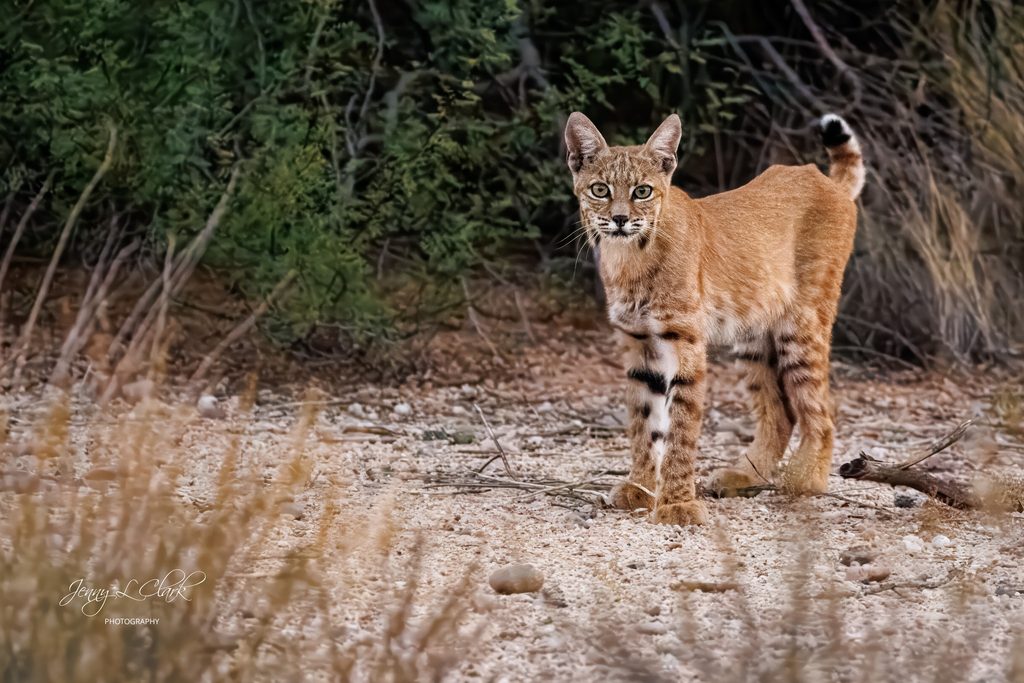
If you’re lucky enough to spot a bobcat along the Salt River, you may not have much time to look. They move quietly and deliberately through the landscape—and this remarkable photograph by Jenny Clark gives us a chance to stop the moment and look more closely.
Notice the long, powerful legs, the broad paws, the spotted coat that breaks up its outline against the desert ground, and those unmistakable tufted ears. Almost everything about a bobcat reflects the life of a solitary predator.
🧭 Behavior and Habitat
Bobcats (Lynx rufus) are found throughout Arizona and are especially at home in rugged, brushy Sonoran Desert habitat. Along the Salt River, the combination of water, vegetation, rocky terrain, and abundant prey gives them many of the things they need: food, cover, water, and space.
They are solitary hunters. Rather than chasing prey over long distances, bobcats depend on patience, excellent eyesight and hearing, and concealment. They watch, stalk, and wait until they are close enough to strike. Rabbits and jackrabbits are important prey, but bobcats also eat rodents, birds, and reptiles.
That makes the river more than simply a place to drink. Its water and vegetation sustain the prey bobcats depend on and provide the cover they use to hunt. A bobcat moving through the Salt River landscape is part of an entire food web built around the river.
💡 Fun Fact 1
A bobcat can leap as far as 12 feet. Those powerful hind legs allow it to spring suddenly from cover when ambushing prey.
💡 Fun Fact 2
Despite being wild predators, bobcats can purr just like a house cat. They can also make an impressive range of other sounds, including growls, hisses, yowls, and screams.
💡 Fun Fact 3
Bobcats can swim. But like most cats, they generally prefer to stay on land.
🌍 Why It Matters
The bobcat is a reminder that animals don’t simply live in a landscape—they become adapted to it. Powerful legs help it move across rocky terrain. Broad paws provide footing on loose desert ground. Its spotted coat helps it disappear into brush and shadow, while exceptional hearing and eyesight help it locate prey.
Along the Salt River, those adaptations fit the landscape particularly well. Dense vegetation provides cover, rocky slopes and washes provide places to move and rest, and the river corridor supports the smaller animals on which bobcats depend.
The horses have adapted to this landscape in their own ways—learning where to find water, shade, forage, and safe places to move through a changing desert river corridor.
Different adaptations. Same Salt River.