
Meet Michelangelo

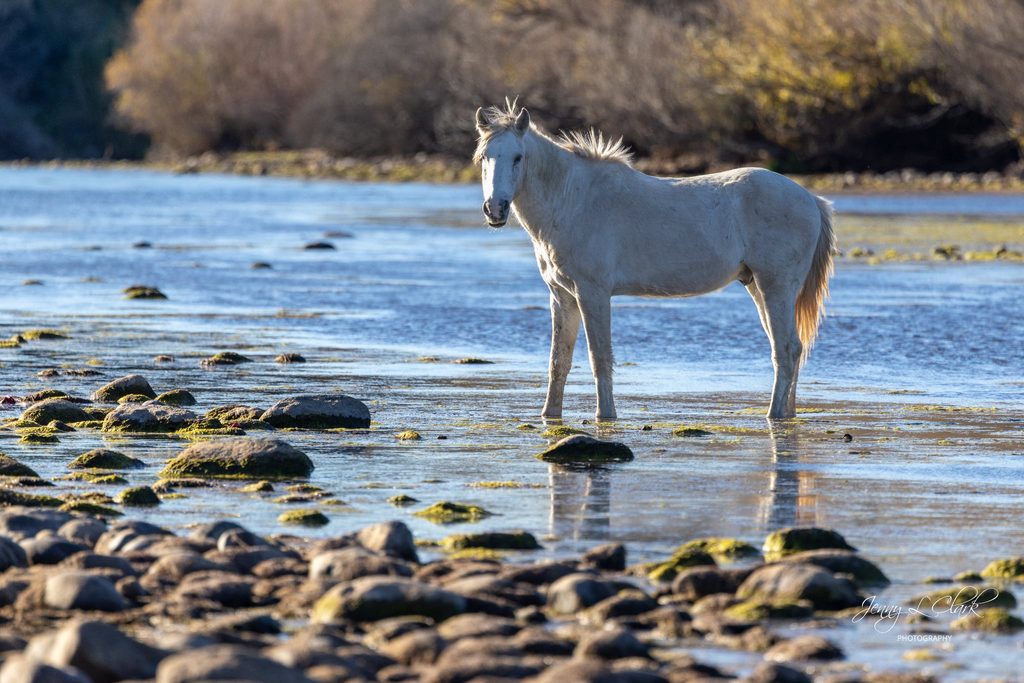
This posts honors Michelangelo, a grey stallion born in 2008—now nearing 18 years of age. At this stage of life, presence itself tells a story.
What Happens as Stallions Reach Old Age
Prime-age stallions spend years in near-constant motion—defending mares, responding to challenges, and engaging in contests that can result in serious injury or death. As younger stallions come into their strength, those encounters become harder to win and more costly to endure.
By the late teens, many stallions have already lost bands or stepped away from them. What often follows is a quieter life on the margins: less confrontation, more rest, and careful use of energy. Older stallions who persist do so not through dominance, but through experience—knowing when to move, when to stand, and when to avoid conflict entirely.
This is not decline. It is adaptation.
Michelangelo’s Place on the River
Michelangelo reflects that reality clearly. He is often seen standing quietly in the river, separate from the movement of the bands, occupying familiar ground without urgency or display. There is no evidence of distress or displacement. Instead, there is steadiness—the posture of a stallion who has already endured the most physically demanding years of his life.
Why He Matters
Meet the Horse Tributes are not only about youth, strength, or visibility. They are also about longevity. Michelangelo reminds us that survival in wild systems is not measured solely by dominance or reproduction, but by how long—and how well—an animal manages to live within the limits of its body and its world.
If you see him along the riverbank, understand what you are witnessing: not isolation, but age earned; not absence, but presence shaped by time.